Bowing Retaining Walls: A Guide for Homebuyers & Sellers
Bowing retaining wall on an inspection report? Learn causes, warning signs, repair vs. replacement options, costs, and how it can impact your real estate closing.
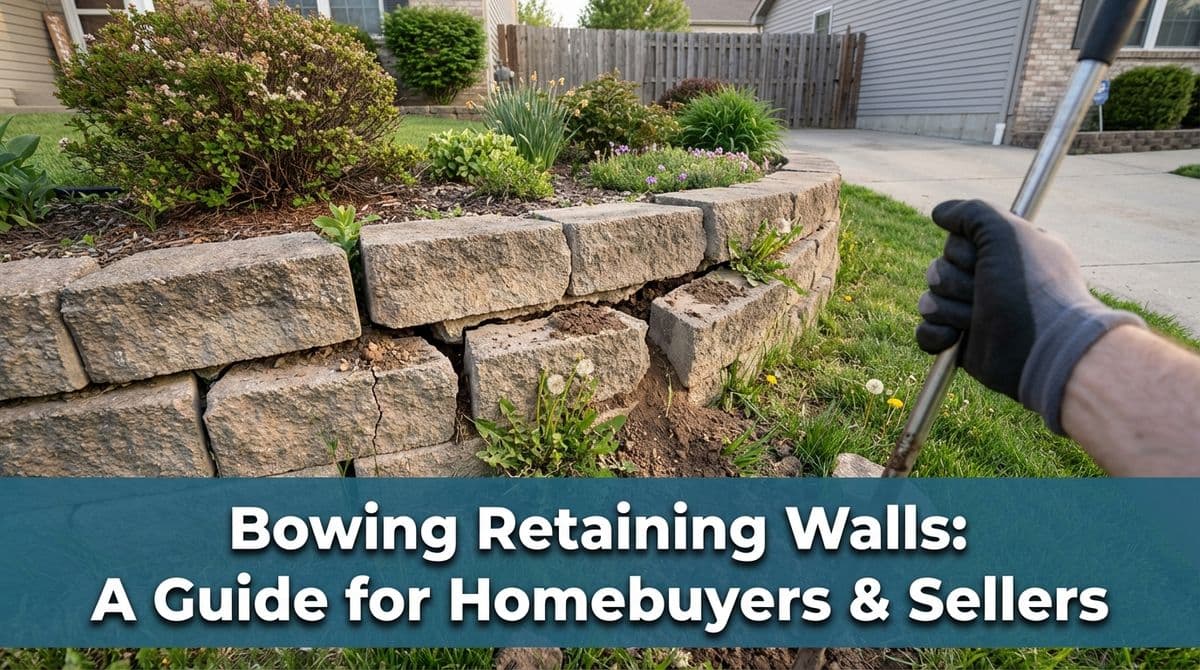
When a Bowing Retaining Wall Shows Up on an Inspection
We recently got a call from a real estate agent — let’s call her Megan — who had a home under contract. During the inspection, her buyers’ inspector flagged a retaining wall along the back patio that was starting to bow. Naturally, the buyers wanted to know: How big of a deal is this, and what will it cost to fix?
Megan also knew her clients would be selling their current home soon, and if they had any retaining wall issues there, they’d want to get ahead of it before listing. That’s exactly the kind of situation where we get called out for a free estimate: bowing walls, nervous buyers, and sellers who don’t want a deal to fall apart at the last minute.
Using Megan’s call as an example, we’ll walk through what causes a retaining wall to bow, what to look for during inspections, how serious it can be, and how repair decisions can affect a real estate closing.
What Causes a Retaining Wall to Bow?
When we go out to look at a wall like Megan’s clients had, we’re usually dealing with one or more of these underlying issues:
- Hydrostatic pressure (water buildup) – Poor drainage behind the wall lets water soak and sit in the soil. Wet soil gets heavier and pushes harder on the wall over time.
- Poor construction or design – Not enough footing, no gravel backfill, missing drain tile, or undersized blocks or timbers can all lead to failure years down the road.
- Soil movement and freeze–thaw cycles – In our climate, water in the soil freezes and thaws, expanding and contracting. That constant movement puts added stress on the wall.
- Extra load added later – Patios, driveways, sheds, or even heavy landscaping installed near the top of the wall can increase the load beyond what the wall was built to handle.
- Age and rot (for timber walls) – Old railroad tie or timber walls eventually rot or lose their anchors, and the wall can start to lean and bulge.
Individually, these might not cause a sudden collapse, but together they slowly push the wall out of alignment until the bow is visible in an inspection photo.
Warning Signs to Look For Before Closing
When we review inspection photos or walk a property with a buyer or seller, here are the common red flags we point out:
- Noticeable bowing or bulging – Stand at the end of the wall and look down its length. If it curves outward, even a few inches, that’s worth further evaluation.
- Leaning or tilting – A wall that’s leaning away from the soil is more concerning than one that’s perfectly vertical but cracked.
- Horizontal or stair-step cracks – On concrete or block walls, a long horizontal crack across several blocks often indicates pressure from behind.
- Separated or shifted blocks/timbers – Gaps between blocks, blocks sliding forward, or timbers pulling apart all show movement.
- Soil erosion or washouts – Voids behind or under the wall, sinkholes, or washed-out joints are signs that water is not being handled properly.
- Standing water – Puddles near the base or top of the wall, or obvious wet spots after a dry spell, point to drainage issues.
During a real estate inspection period, spotting these signs early gives buyers and sellers time to get proper estimates and decide how to negotiate.
How Serious Is a Bowing Retaining Wall?
Not every bowing wall is an emergency, but none of them should be ignored. When we inspect a wall, we’re asking three main questions:
- Is it currently unsafe? If the wall is significantly leaning, crumbling, or supporting a driveway, porch, or other structure, we treat it as a higher-priority safety issue.
- Is it actively moving? Fresh cracks, recent soil displacement, or misaligned fences or rails can indicate ongoing movement.
- What is the wall retaining? A wall holding back just a landscaped slope is one thing; a wall holding up a parking area or part of the yard where kids play is another.
In many cases, a bowing wall can be stabilized and last for many years with the right repair. In other cases—especially where there’s severe movement or failed drainage—full replacement is the safer, more cost-effective option.
Repair vs. Replacement: What Are the Options?
When we meet buyers and sellers on site, they usually want to know, “Can this be fixed, or do we have to tear it out?” The answer depends on the wall’s condition, but here are the typical paths:
Common Repair Options
- Anchoring or tie-back systems – For some bowing walls, we can install anchors or helical tie-backs into stable soil behind the wall to pull it back and hold it in place.
- Rebuilding sections – If only part of the wall is failing, we may remove and rebuild that section while addressing drainage.
- Improved drainage – Adding or repairing drain tile, weep holes, gravel backfill, and proper surface grading reduces pressure behind the wall.
- Face repairs – On minor issues, we may reset loose blocks, fill joints, and correct minor bulges, but this is only appropriate when structural integrity is still good.
When Replacement Makes More Sense
We typically recommend full replacement when:
- The wall has a pronounced lean or bow over a long stretch.
- Timbers or ties are rotted or structurally compromised.
- Drainage is completely inadequate and cannot be corrected without rebuilding.
- The wall was never designed correctly for the height or load it’s retaining.
Replacement costs more up front, but it often comes with better long-term performance, modern materials, and a clean engineering story you can hand to future buyers.
What to Expect From a Retaining Wall Inspection and Estimate
On Megan’s call, the first thing we asked for was photos from the inspection report. That’s usually step one.
- Photo review – We review inspection photos to decide how urgent the situation is and whether we need to prioritize a quick site visit for a pending closing.
- On-site visit – We walk the wall, check alignment, look for cracks and movement, and assess drainage and surrounding loads (driveways, patios, etc.).
- Measurements and notes – We measure wall height, length, and slope, take additional photos, and sometimes recommend involving an engineer for larger or more complex walls.
- Written estimate – We provide a written estimate outlining recommended repairs or replacement, the scope of work, and approximate timelines.
For buyers and sellers in the middle of a transaction, we also try to explain in plain language how serious the issue is and whether it’s something that must be addressed immediately or can be planned for in the near future.
Typical Cost Ranges and What Affects Price
Every wall is different, but here are general ranges we see, just to give you a ballpark:
- Minor stabilization and drainage fixes: Often in the low thousands, depending on access, length of wall, and how much drainage work is needed.
- Partial rebuilds: Typically mid-range, varying with materials (block, timber, engineered systems) and wall height.
- Full replacement: This can run higher, especially for tall walls, tight access, or premium materials like decorative block systems.
Factors that drive cost up or down include site access for equipment, wall height, total length, soil conditions, need for engineered design, and how much landscaping, fencing, or hardscaping needs to be removed and replaced.
How Retaining Wall Issues Impact a Real Estate Deal
Bowing walls tend to show up on inspections right when everyone is already on edge. Here’s how we typically see them affecting transactions:
- Negotiations and credits – A clear written estimate lets buyers and sellers negotiate repairs, price reductions, or credits with real numbers instead of guesswork.
- Financing and insurance – In more serious cases, lenders or insurers may want to see that a failing wall has been addressed, especially if it affects driveways or structures.
- Buyer confidence – Buyers feel much better moving forward when a professional has evaluated the wall and explained the risk and repair options.
- Future resale value – Sellers who fix a problem now can often market the property later with “recent retaining wall improvements” instead of dealing with the same inspection issue again.
In Megan’s situation, getting us out there quickly for a free estimate helped her buyers decide whether to proceed and gave both sides a clear path forward.
Simple Maintenance Tips to Prevent Bowing
If you already own a home with a retaining wall, a little maintenance can go a long way:
- Keep gutters, downspouts, and surface drains directing water away from the top of the wall.
- Don’t stack heavy materials (pavers, firewood, dirt piles) right at the edge above the wall.
- Watch for early signs of movement—small cracks, slight bulges, or new gaps—and address drainage issues early.
- Have older timber or DIY walls checked periodically, especially if they’re holding back more than a gentle slope.
Catching problems early almost always means simpler, less expensive repairs.
Buying or Selling With a Bowing Retaining Wall?
If an inspector just flagged a retaining wall on your deal, you’re not alone. We work with agents, buyers, and sellers all the time to evaluate bowing and leaning walls, explain the seriousness of the situation, and provide clear repair or replacement estimates.
Before you panic—or walk away from a deal—have a professional take a look. With the right plan, you can protect the property, keep people safe, and move toward the closing table with a lot more confidence.