Large-Format Stone Steps Built for Patio Access and Flow
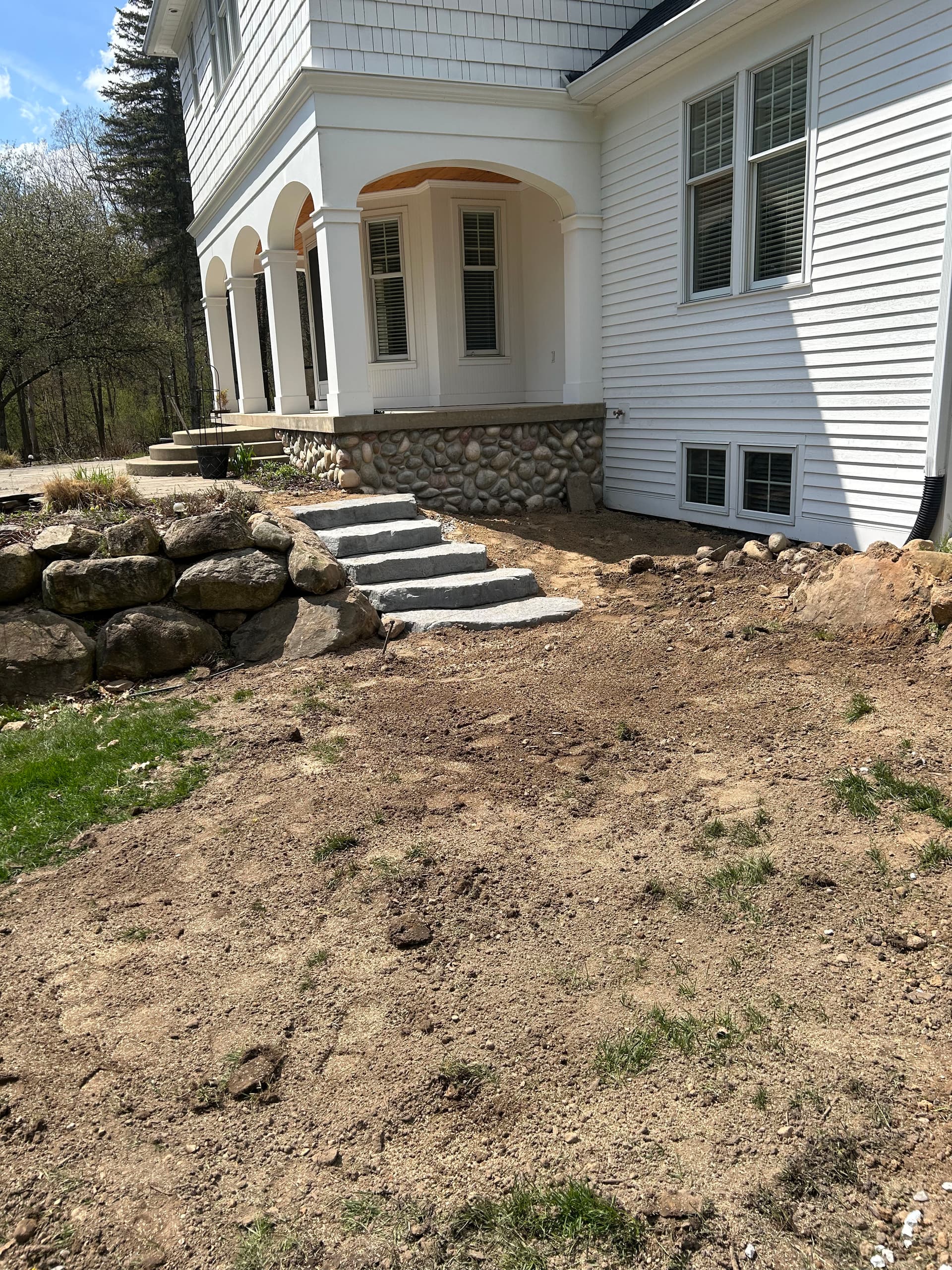
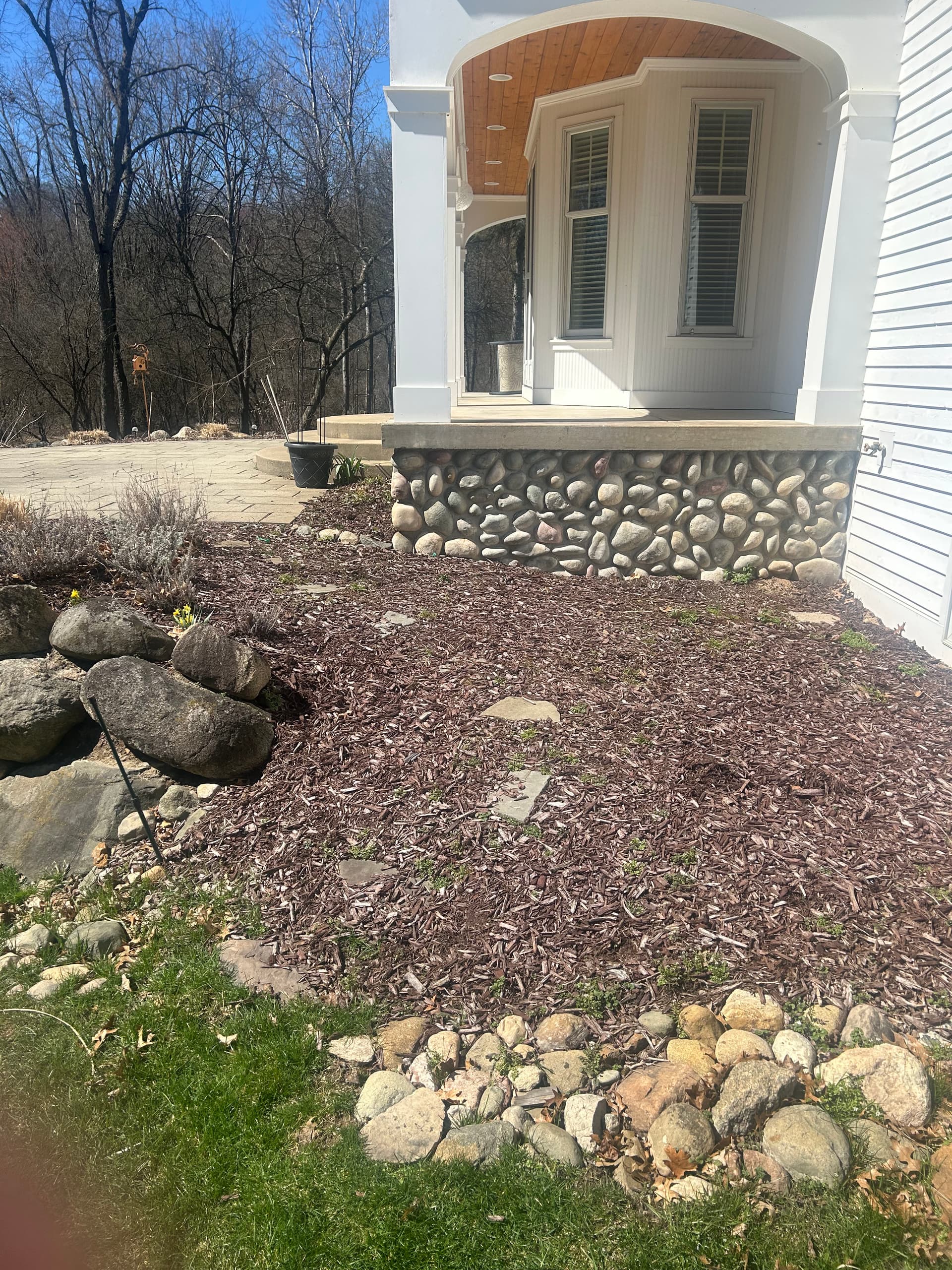
When a yard has grade changes between the lawn and patio, getting from point A to point B becomes a real problem. Not just functionally - it looks unfinished too. That's exactly what we were working with here. The slope running alongside the house needed a proper connection point to the patio, and a flimsy fix wasn't going to cut it.
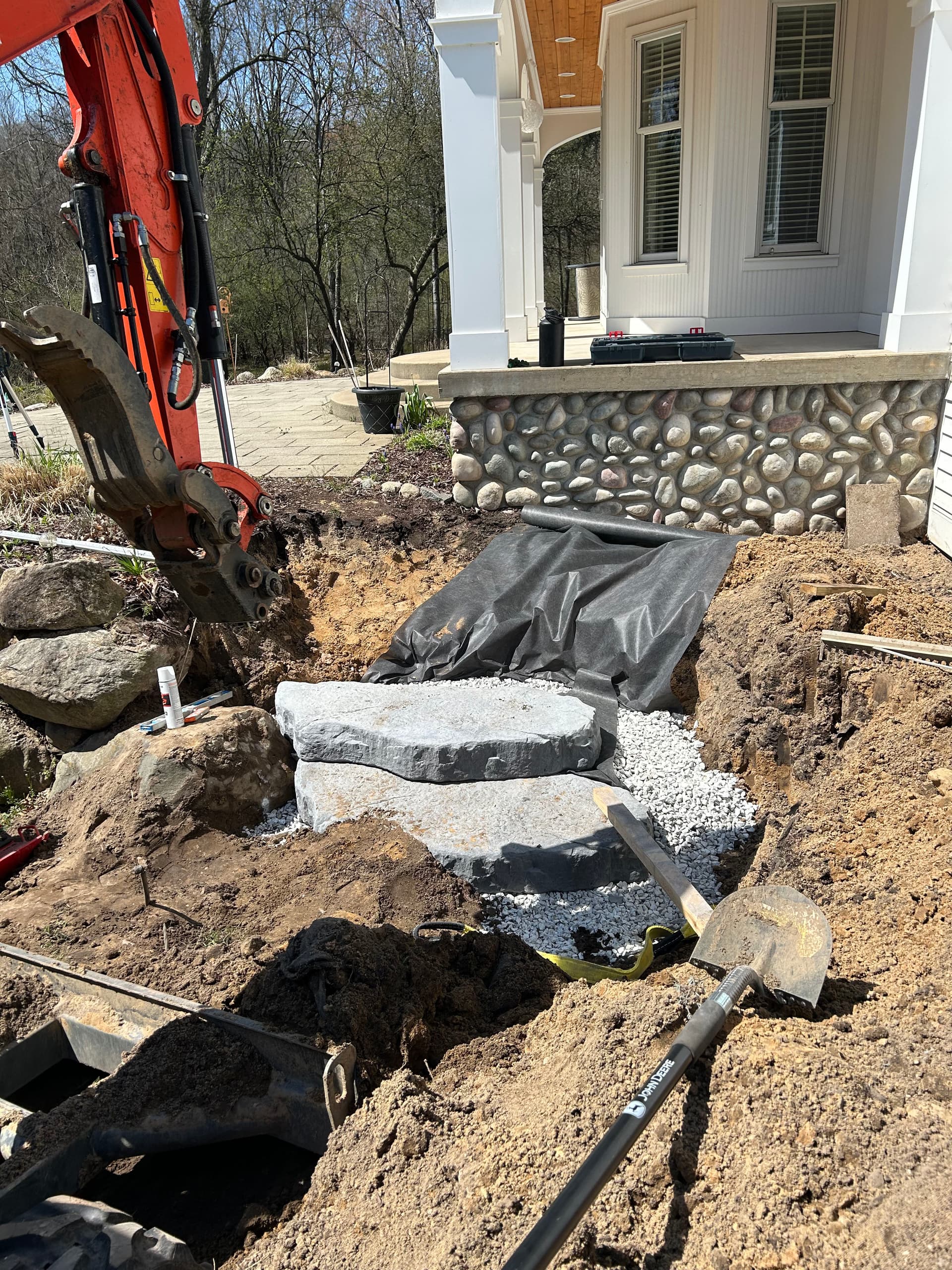
We went with large-format stone steps to bridge that elevation change. These aren't light pieces - they take real equipment and careful placement to get right. You can see from the mid-install work that we excavated properly, laid a compacted gravel base, and used geotextile fabric before setting each stone. That prep work is what keeps steps like these from shifting or settling down the road.
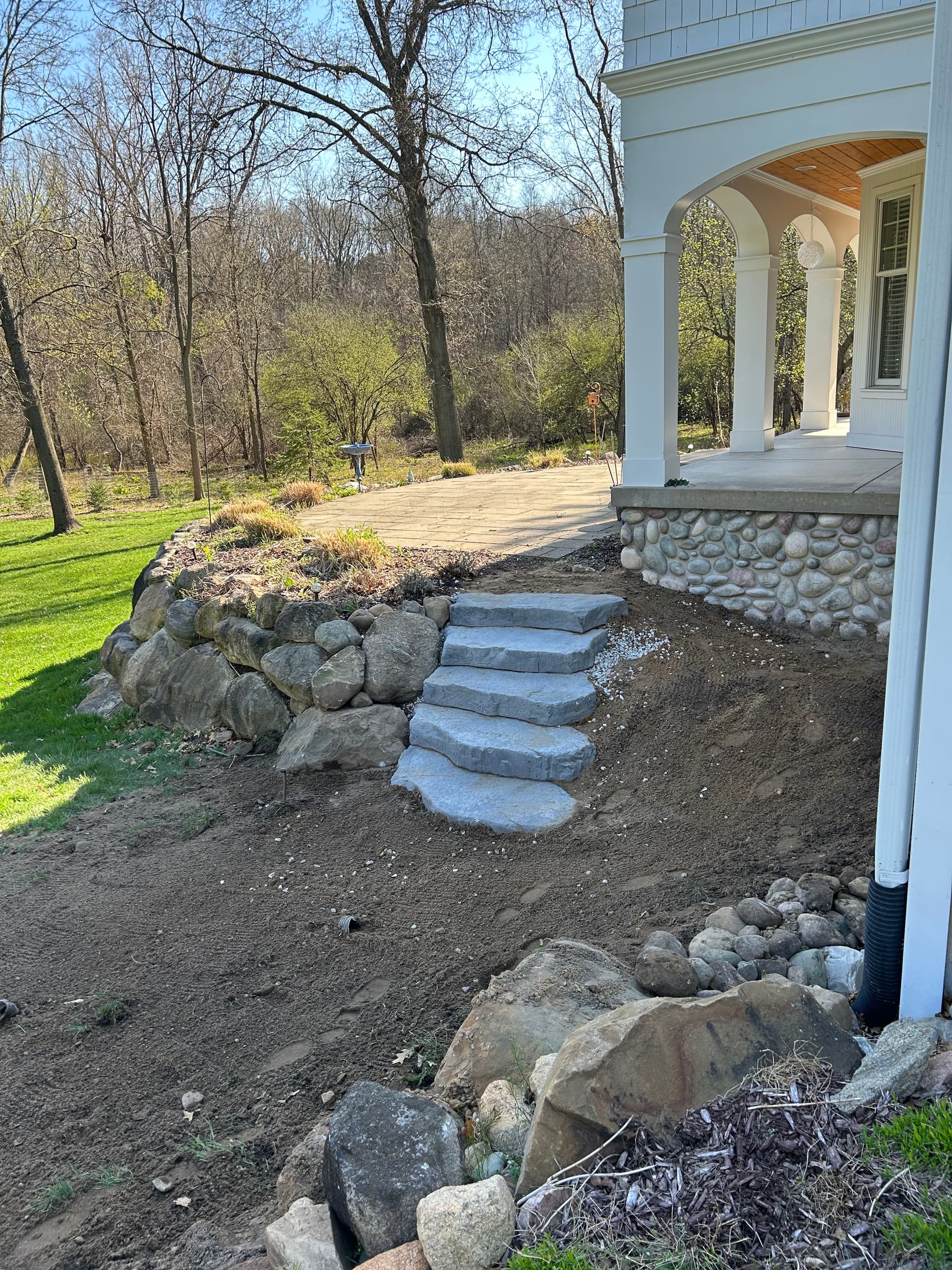
The finished steps sit cleanly against the existing boulder retaining wall, which ties the whole side yard together. The gray tones in the cut stone echo the rounded fieldstone on the home's foundation - that kind of visual continuity doesn't happen by accident. It takes some thought about how each element relates to what's already there.
With mulch installation wrapping out the planting beds around the base of the porch, the space reads as one cohesive design rather than a collection of separate features. The steps do the functional work of connecting two levels, but they also anchor the whole side of the property. That's the difference between hardscaping that just solves a problem and hardscaping that actually improves the space.